
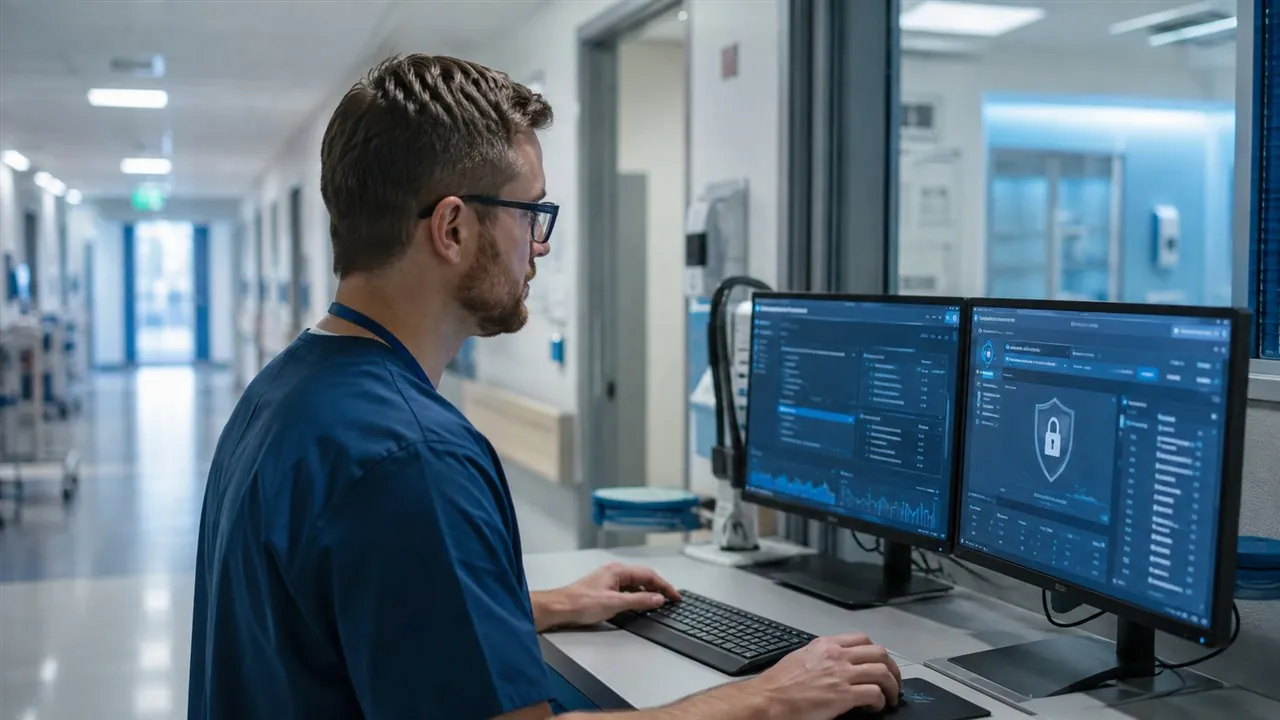
The CNIL notes insufficient authentication, too wide authorizations and late detection around the patient file.
On September 3, 2026, the CNIL announced a sanction of 500,000 euros against the Loire private hospital following a violation that affected data from patients and trusted third parties.
What the ad actually changes
The decision highlights several cumulative weaknesses: insufficiently robust external authentication, overly broad authorizations and lack of rapid detection of abnormal activity. The incident illustrates the multiplier effect of a compromised account when it can consult an excessive perimeter.
This news must be read in the specific scope described by the source: date, products or organizations concerned, availability and limits. Before making a decision, a team must check the announced facts and bring them closer to its own environment.
Key points to remember
- The absence of VPN and multi-factor authentication was noted for some external access.
- The authorizations did not sufficiently limit the files to the care teams concerned.
- The affected trusted third parties had not all received the expected direct information.
Consequences for sites and digital teams
The lessons go beyond the hospital sector: any application containing sensitive data must combine MFA, rights segmentation, monitoring and information procedure. Security cannot be based on the single password or late detection.
For an agency or a company, the right reaction consists in qualifying the concrete consequence of the announcement: systems concerned, exposed data, responsible persons, costs and deadlines. This step avoids transforming ad hoc information into a hasty decision or too general recommendation.
What to check before acting
- Identify remote access and impose risk-friendly authentication.
- Periodically review the authorizations according to the actual missions.
- Detect abnormal volumes or paths and test people's notification.
Our reading
This sanction reminds us that the risk is measured both by the probability of intrusion and by the extent of what an account can reach. Reduce rights and accelerate the alert directly limits the severity of a violation.
Useful monitoring consists of documenting the situation before the change, testing over a limited perimeter and maintaining a backspace solution. The results should be appreciated on real cases: quality, safety, time saved, full cost and ease of human control.
official source
This article is based on the announcement published by CNIL. The source page remains the reference for availability conditions and subsequent changes.