
Estimated reading time : 2 min · Published October 1, 2026
Use the same scope for each proposal
List the pages, languages, journeys and content before comparing amounts. Identify who writes copy, prepares photography, enters products, produces translations and approves facts. A proposal excluding content migration cannot be directly compared with one that includes it. Ask which tests, training and handover documents are included in the quoted fee.
Separate launch requirements from future options. Booking, commerce and membership features each require implementation and ongoing operation. A feature nobody can administer is not a saving.
- Pages and languages.
- Features people will use.
- Provided content and migration work.
- Deliverables, acceptance and support.
Collect recurring and one-off costs
Record domain, hosting, maintenance, licence and publishing costs. Use renewal prices rather than introductory discounts alone. Note commitments, duration, usage limits, per-user charges and optional features. Variable transaction or consumption fees need a separate usage scenario.
Include future changes: a new section, another language, original photography or data migration. Their cost cannot be reliably inferred from page count alone. Obtain a quote for a concrete example and keep the assumptions explaining the figure.
- Amounts on a consistent tax basis.
- Renewals and commitment periods.
- Included usage and variable charges.
- Internal work identified separately.
Compare time horizons without inventing prices
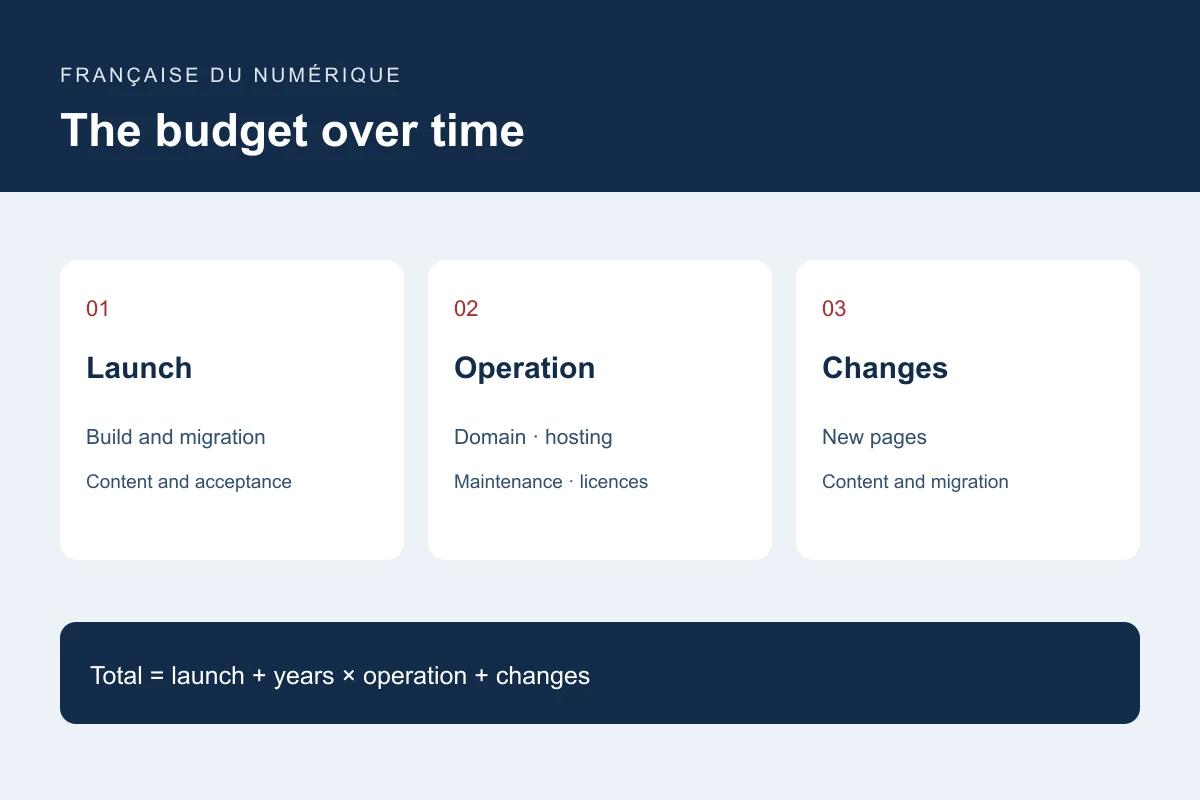
With constant annual amounts, a three-year total equals launch spending plus three years of operation plus planned one-off changes. Where rates differ by year, calculate each year separately. An annual payment does not automatically include all desired interventions.
The website budget calculator adds your own estimates. An empty field counts as zero: the result remains incomplete until all relevant items have been checked. It does not replace a written proposal or predict a supplier’s prices. Record the source of each amount, the quote date and excluded work.
- First-year and multi-year totals.
- Confirmed amounts separated from estimates.
- The same usage scenario for each proposal.
Plan exit and keep a decision record
Ask what you receive on exit: domain, files, copy, media, catalogue data, access and documentation. Check export formats, migration assistance and termination charges. A lower initial fee may come with substantial work when changing supplier; this should be explained before selection.
Keep the selected scope, justified amounts, total, limits and an owner for each item in a short decision document. The agency’s indicative budgets, domain and hosting guide and handover guide help prepare questions. The final written proposal defines the commitments.