
Estimated reading time : 3 min · Published October 1, 2026
Define a useful scope
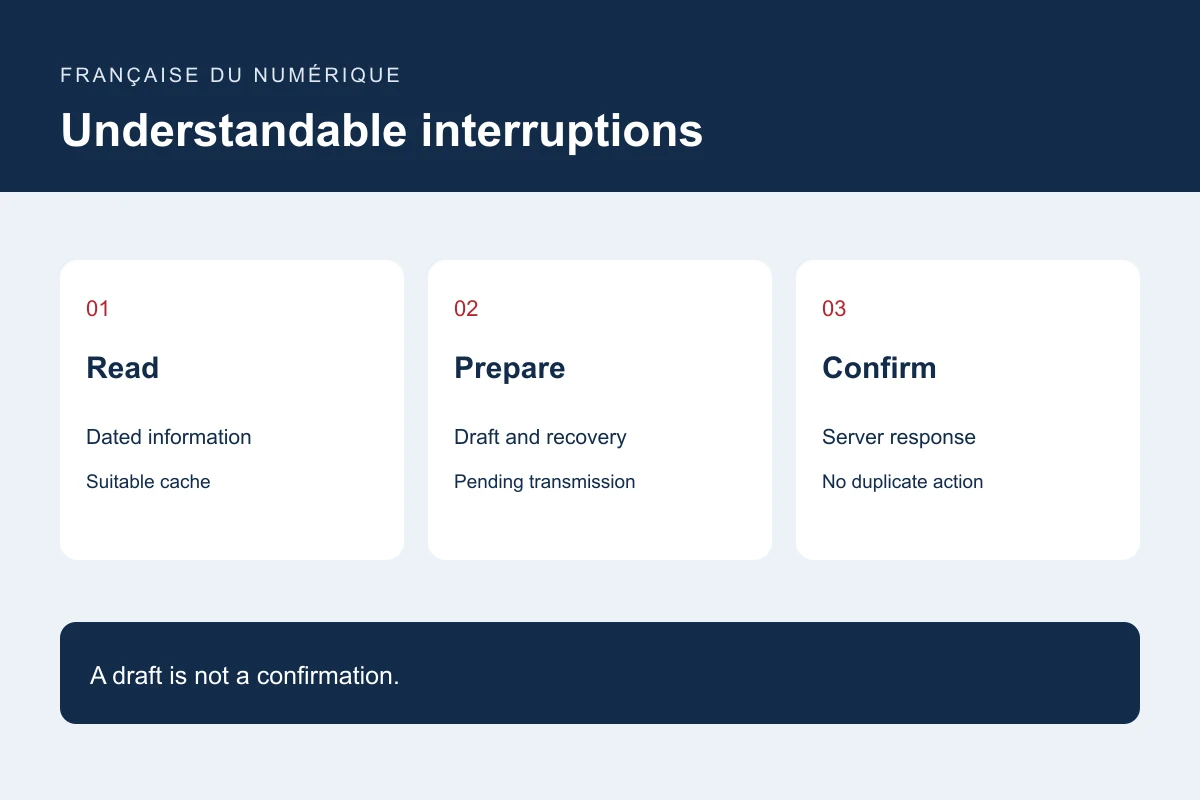
Classify tasks such as reading stable information, preparing a draft, checking availability or paying. The latter depend on data and confirmations that should not be assumed current offline. Explain unavailable actions usefully.
A simple site can remain useful through lightweight pages and reliable links without adding an offline application. Assess actual interruptions and essential content first. Additional mechanisms need owners and tests rather than merely technical names.
Describe states unambiguously
Separate local draft, awaiting transmission, server receipt and completed processing. Write a message and recovery action for each. A connection icon or disabled button alone does not explain what happened to the request.
MDN documents service workers and offline or background operation. Assess availability and lifecycle in the project’s target browsers. Browsers may interrupt work, so the journey should remain understandable without relying on continuous execution.
Test interruption at an inconvenient moment
In a test environment, disconnect before sending, during transfer and after server receipt. Restore the network and reload. Check what is retained, lost, repeated or shown as complete. The difficult case is often uncertainty about an already-received request.
Use a new session and another device if cross-device continuity is promised. Ask someone unfamiliar with the architecture to test messages. They should understand the remaining action and how to avoid placing a second order.
Check freshness and privacy
For retained information, show date and permitted use. Old availability may orient a visitor without authorising a booking. Define what remains on the device after logout and who reviews shared-device risks.
After a new release, check resource replacement and local-data compatibility. Provide a way to recover permitted drafts or restore simple operation. Deliver states, interruption tests, retention rules and degraded-mode limitations.
Primary documentation : MDN — Offline and background operation.