
External resource

Geneanet
Family trees and genealogy research.
- Source scope
- International
- Destination
- www.geneanet.org
Selection reviewed on
Open website — GeneanetA shared name is not enough to identify an ancestor. Research progresses by linking dated documents, places and people.
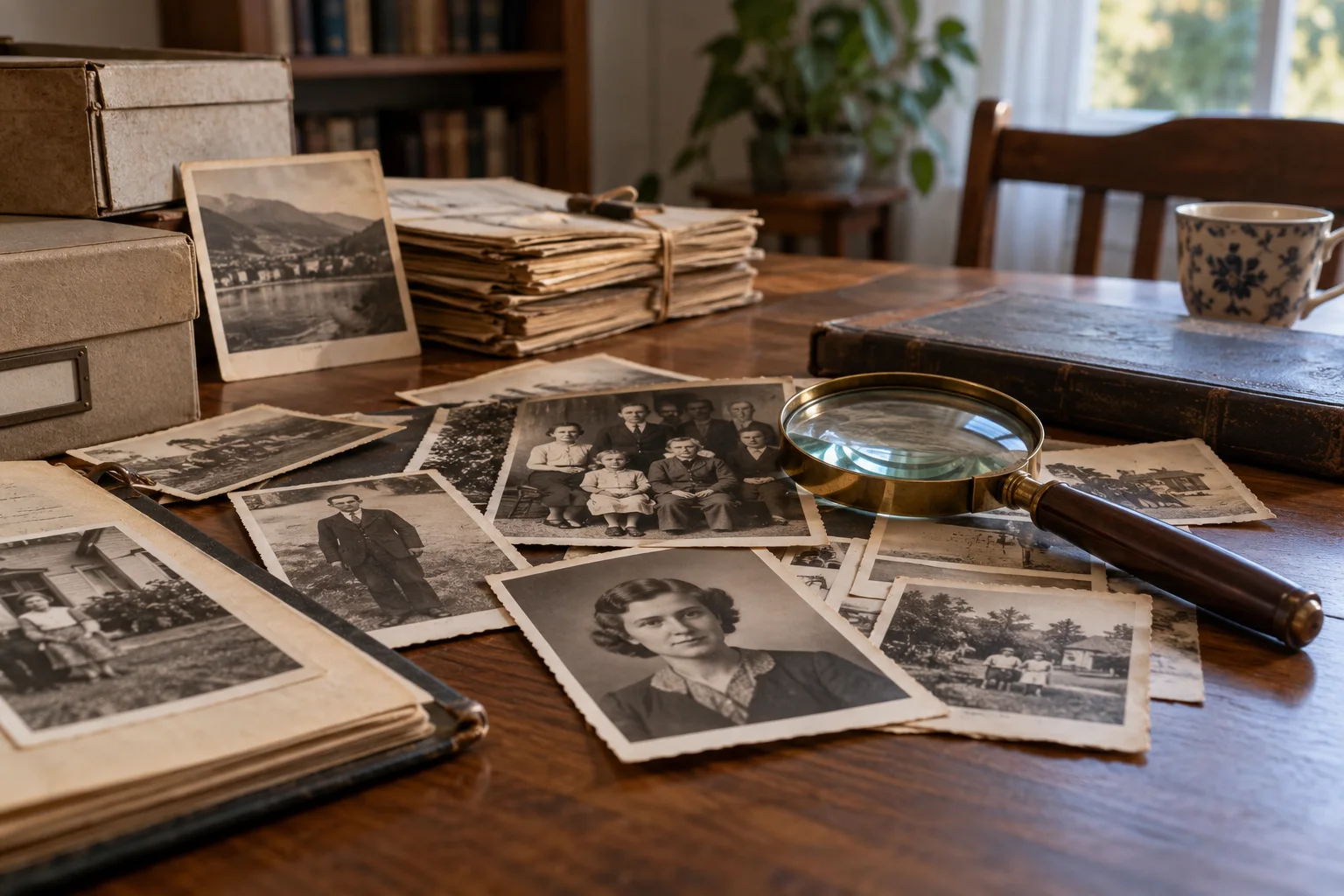
Link each person to a record with place, date and archive reference before copying a family tree.
Compare people with identical names and retain uncertainty; a shared tree is not independent evidence of ancestry.
Geneanet : Family trees and genealogy research. MyHeritage : Family trees and historical records. FamilySearch : Archives and family history research.
Keep the useful page address, your selection criterion and the date you consulted it.
Cross-check places, dates, family relationships and document references. Keep alternative hypotheses until evidence separates them; a name match in an index does not establish ancestry.
Check covered dates, locality, spelling variants and index type. Find the collection inventory before concluding; a document may not be digitised, indexed or accessible through that same tool.
Two documents mention the same name around similar dates. Do not merge people without comparing places, relatives and other clues.
Keep a reference for each document and a separate hypothesis. Support family links with evidence; limit sharing information about living people.
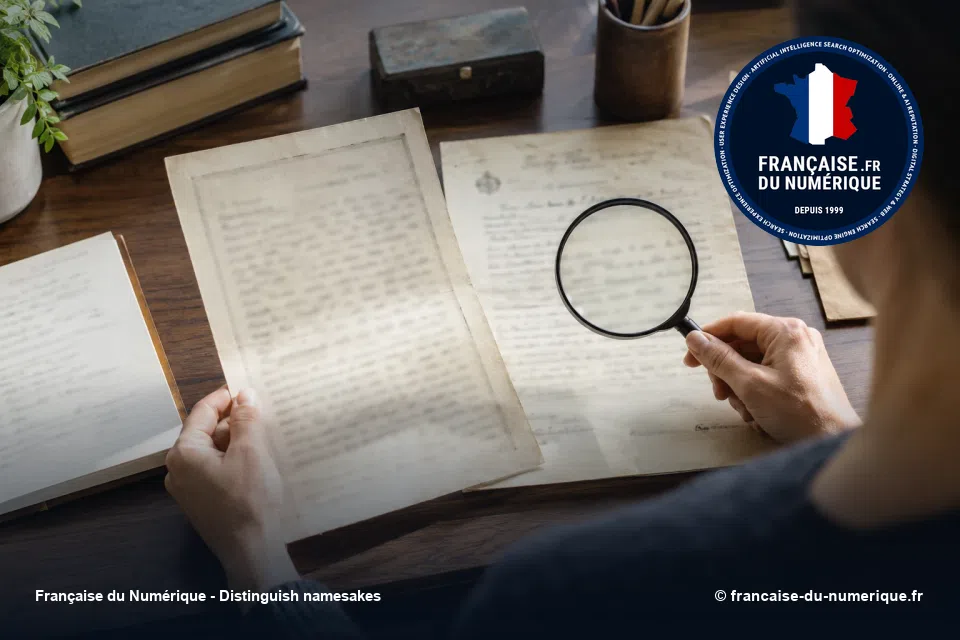
A repeated name does not establish that records concern one person. Approximate age or a nearby place calls for comparison with the document’s other information.
| Information recorded | Research decision |
|---|---|
| Two records name “Jean Martin” in neighbouring communes. | Keep two records with archive references; name and proximity do not establish one person. |
| A shared parent is assumed but no record establishes the link. | Mark the relationship as a hypothesis and seek a record establishing the connection. |
Keep a separate record per hypothesis with archive reference, page and date. Seek a documented link before merging the people’s histories.
Additional source : Ministère de la Culture · Portail généalogie · France
Back to resources →Search this selection by name, domain or text. Every word entered must match.
No resource found. Clear a filter or try a domain name.
Family trees and genealogy research.
Selection reviewed on
Open website — GeneanetFamily trees and historical records.
Selection reviewed on
Open website — MyHeritageArchives and family history research.
Verification path
Learning example: adapt files, identifiers and conditions to a test copy before interpreting the result.
Selection reviewed on
Open website — FamilySearch
Finding a work, archive or document means distinguishing the original object from its digital reproduction.
Reading a figure about a country requires its definition, period and reference population.

A recent post can reuse an old image. Before sharing, identify the exact claim and the evidence supporting it.

